Network Load Balancer TLS listener and Access Log activation features added

The following announcement for new Load Balancing features was written based on information available in November 2023. For the latest information about KakaoCloud Load Balancing, see Load Balancing.
Hello, we are introducing two major releases for KakaoCloud Load Balancing.
1. TLS listener added to Network Load Balancer (NLB)
TLS has been added to the NLB listener protocol among KakaoCloud load balancer types.
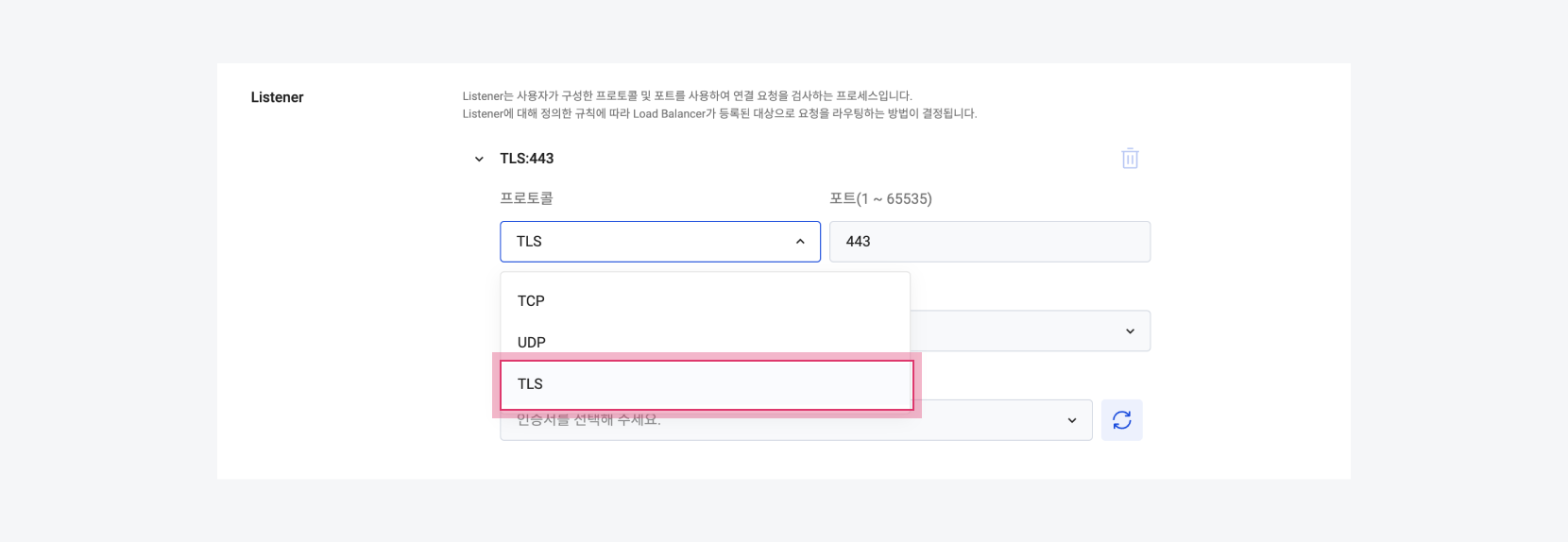 Selecting the TLS protocol
A TLS listener can offload encryption and decryption work to the load balancer. To use a TLS listener, you must deploy and specify at least one server certificate on the load balancer. This certificate is called the default SSL certificate, and after creating a TLS listener in the console, you can replace it or add a new certificate. KakaoCloud NLB supports TLS versions from 1.0 through 1.2.
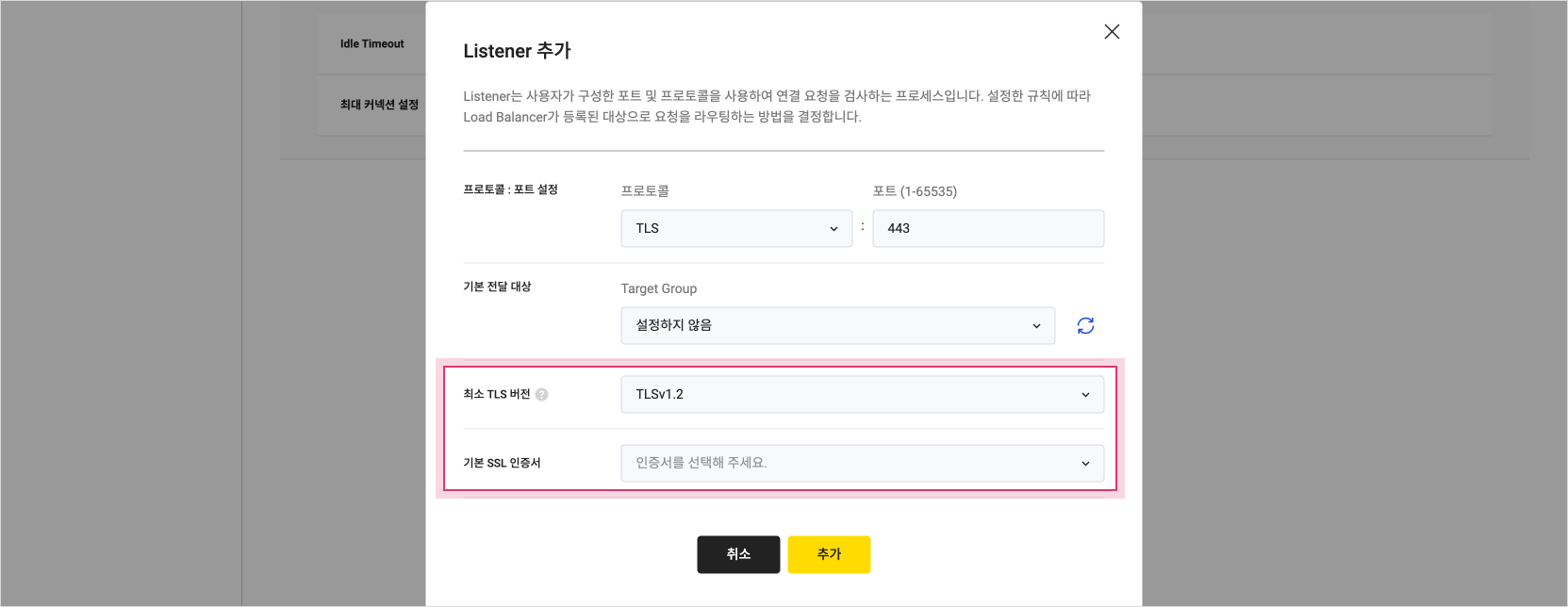 Selecting the minimum TLS version and setting the default SSL certificate
For instructions on creating a TLS listener, see the linked document.
2. Access Log activation feature provided
An Access Log activation feature has been added to all KakaoCloud load balancer types.
Access Logs are information collected to analyze traffic patterns sent to a load balancer and troubleshoot issues.
Access Log is an optional feature that users can select, and it is set to Disabled by default in the console. If you change the Access Log feature to Enabled and activate it, compressed files of captured logs can be stored in a specified Object Storage bucket. The Object Storage bucket must be located in the same region, and the encryption setting for the bucket must be set to Disabled. When configuring Access Log in the console, you can find a detailed configuration guide in the pop-up window shown below.
 Object Storage bucket guidance when configuring Access Log
For reference, networking costs are not charged for transferring log files, but Object Storage costs are charged.
For a more detailed explanation of Access Log, see the linked document.
We will continue working to provide safer and more convenient cloud services.
Thank you.